Cornerstone of Engineering 2 · Northeastern University · Spring 2026
Sounds of the Jungle
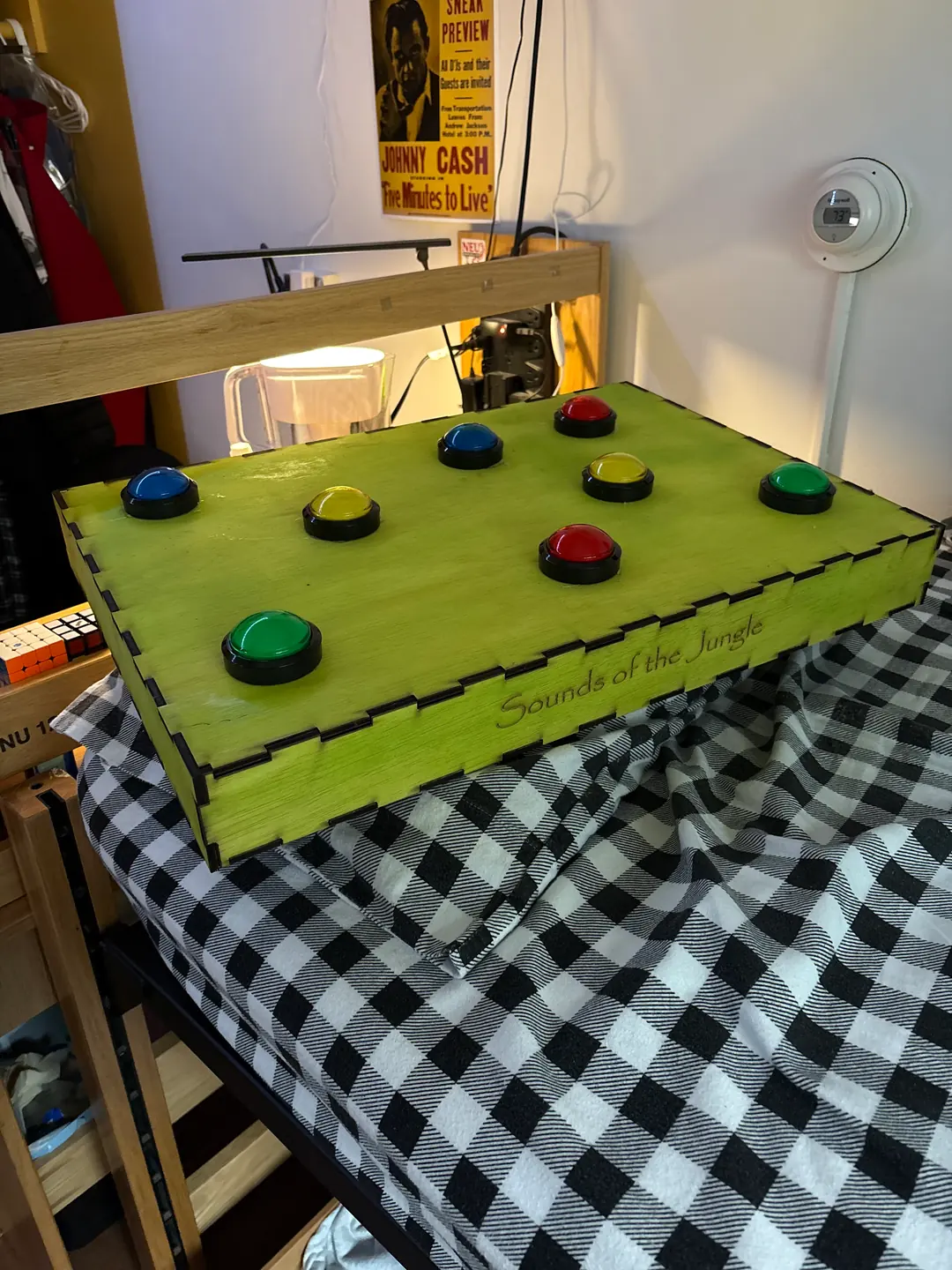
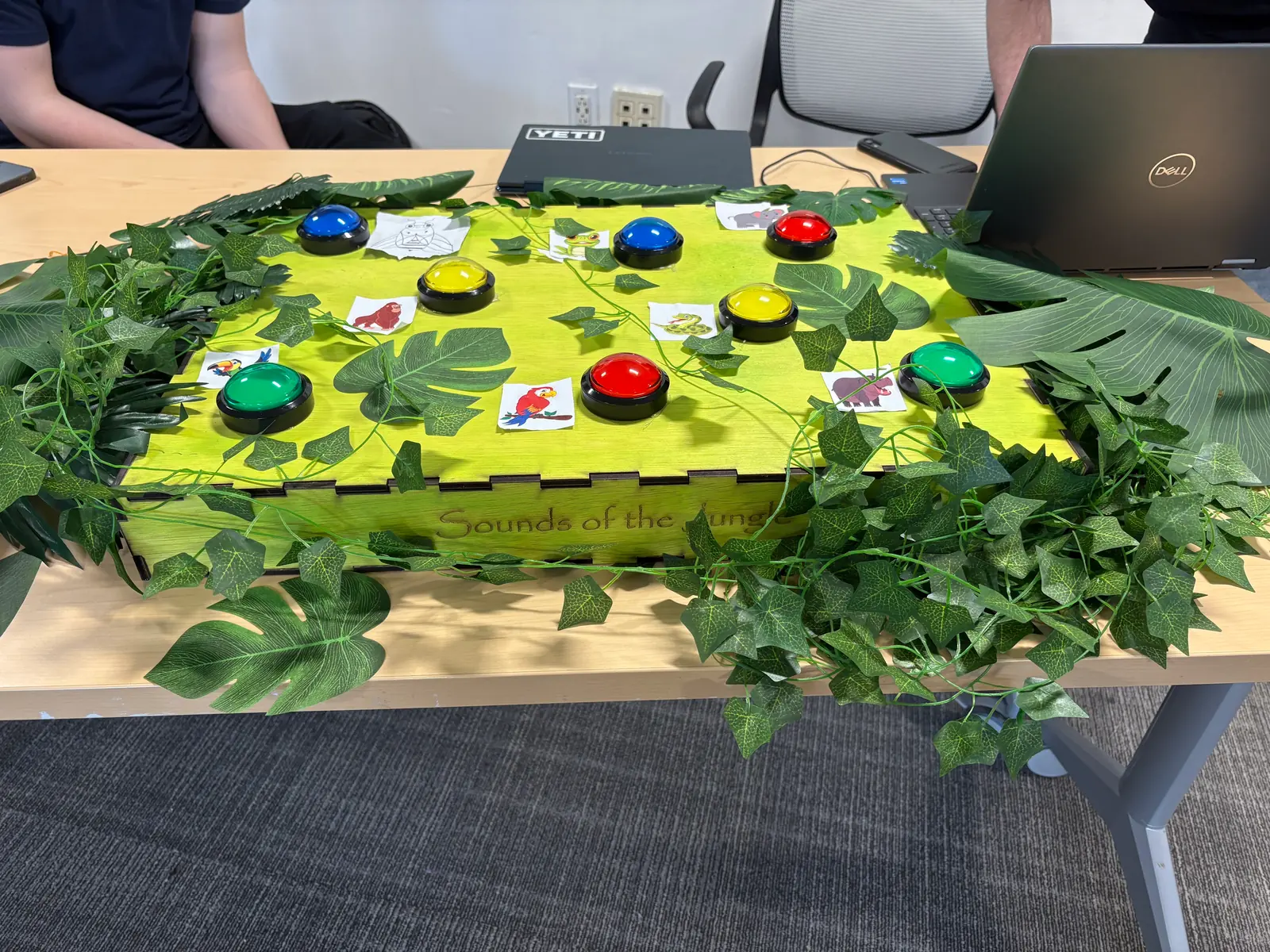
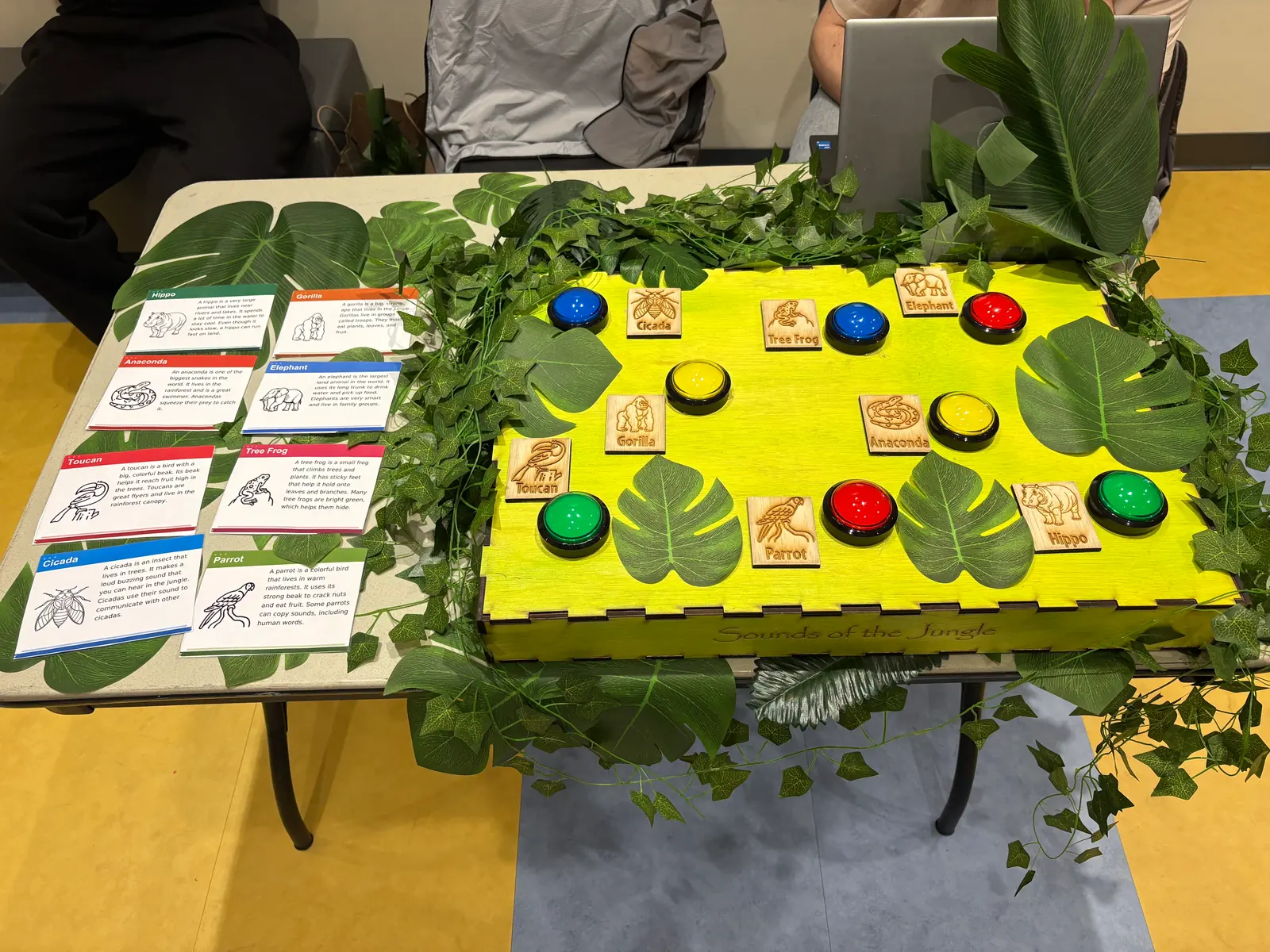
An interactive animal-sound guessing game for the Boston Children's Museum. Eight engraved animal tiles, eight big buttons, and an SD card → MP3 module → speaker circuit run by Python, all in a painted plywood box designed to take a beating from kids.
- My part
- Structure and layout in AutoCAD, the soldered circuits, the Python game code, and museum-day testing
- Team
- 4 engineering students
- When
- Mar – Apr 2026
- Shown at
- Boston Children's Museum
- Inside
- SD card, MP3 module, speaker, 8 buttons, laser-cut plywood, Illustrator art
How it came together
-
Design the board and the circuit
Designed the physical structure and layout in AutoCAD of an interactive animal sound guessing game for the Boston Children's Museum. Soldered circuits for an SD card → MP3 module → speaker setup and coded the game in Python.

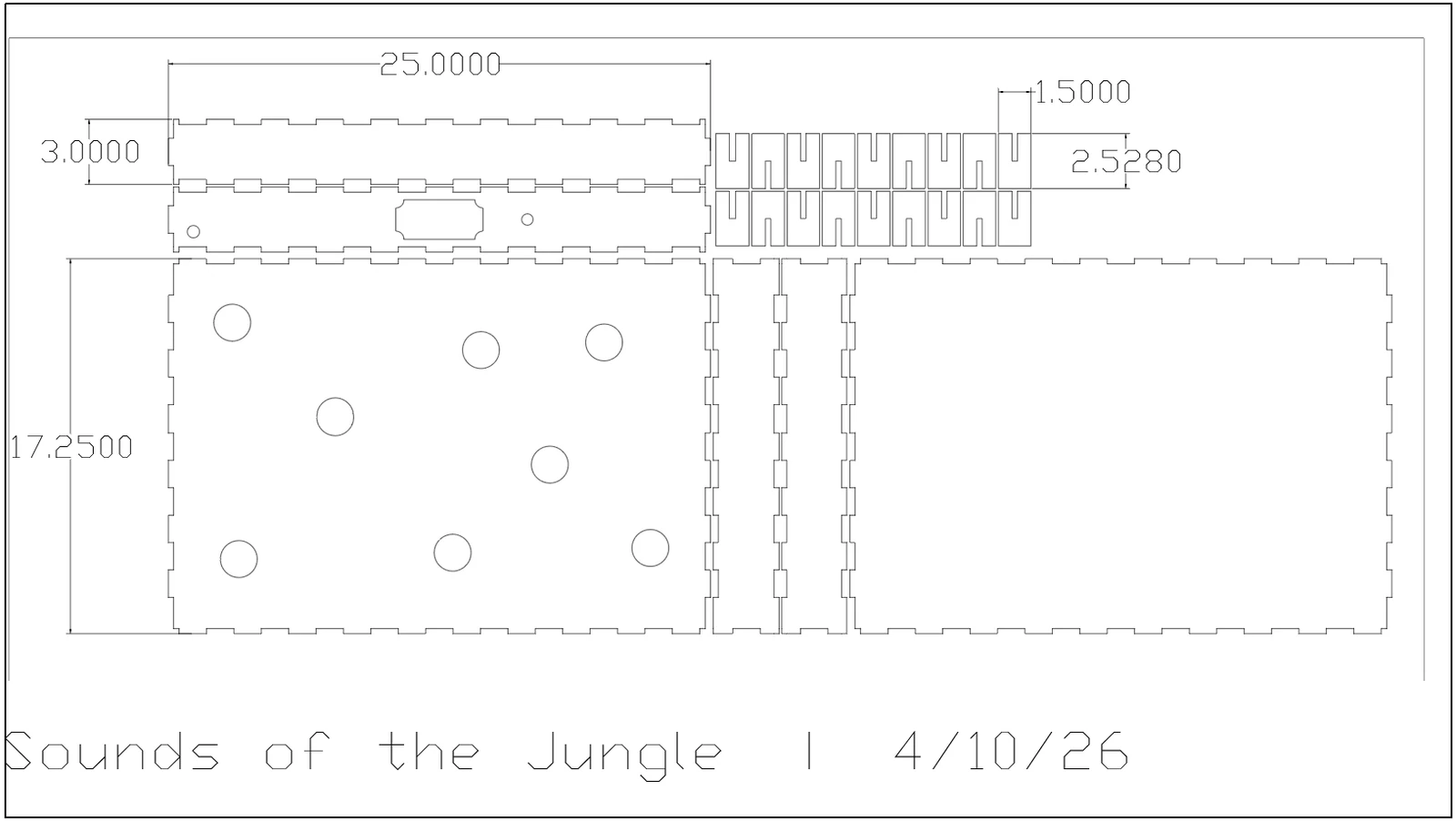
Final Adobe Illustrator art (top) to raster and cut the animal tiles, and AutoCAD (bottom) to laser cut the board and structural supports. -
Cut it, build it, paint it
Laser cut the board, animal icons and supports out of plywood. Designed the supports to withstand the immense smashing strength of children. Painted the box and decorated the table to create an immersive experience for the kids.
Time-lapse: the laser engraving the title onto a side panel. 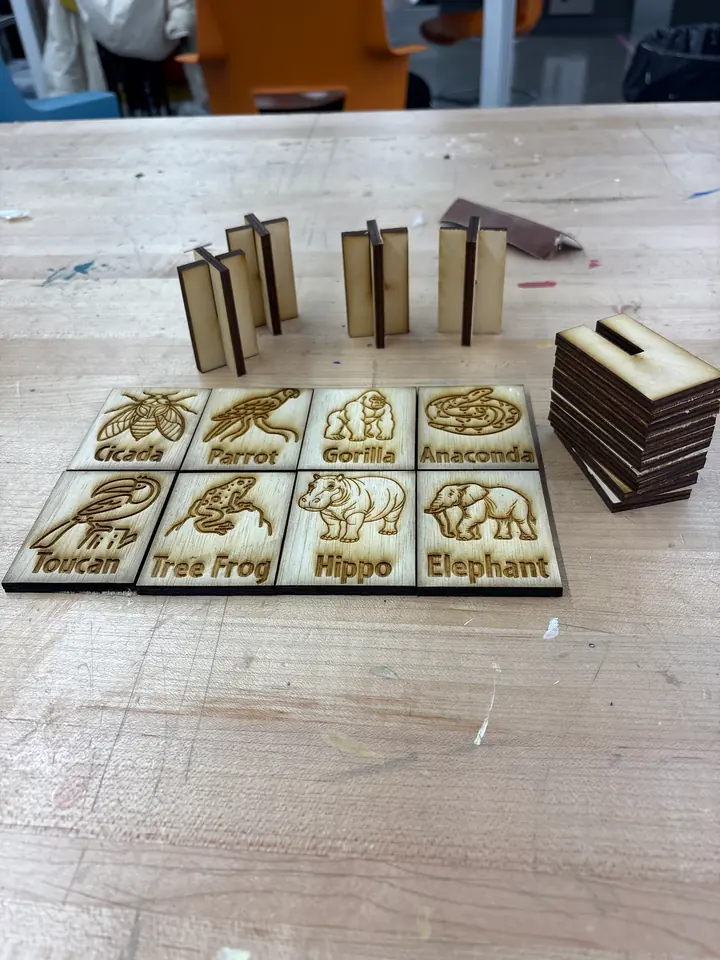
Cut pieces: animal tiles, supports and panels. -
Run it at the museum
Recorded real-time data at the museum exhibition on retention, win rate and technical failure. Diagnosed failures in the MP3 module in real time (it was getting too many input requests) and implemented simpler code to keep the game working on museum day.
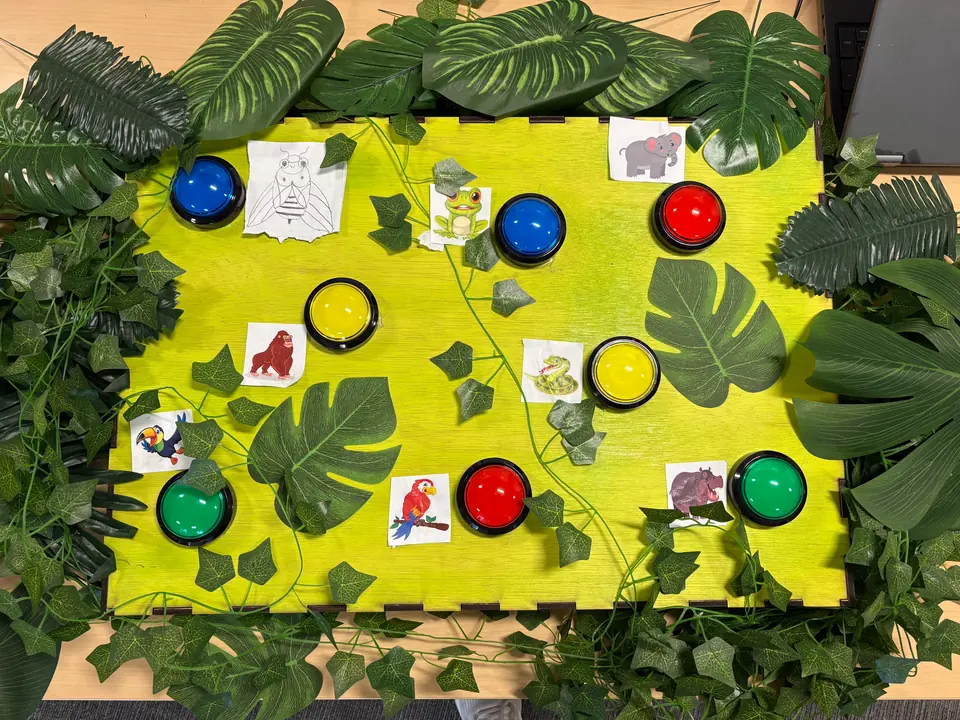
The board from above, ready for players.
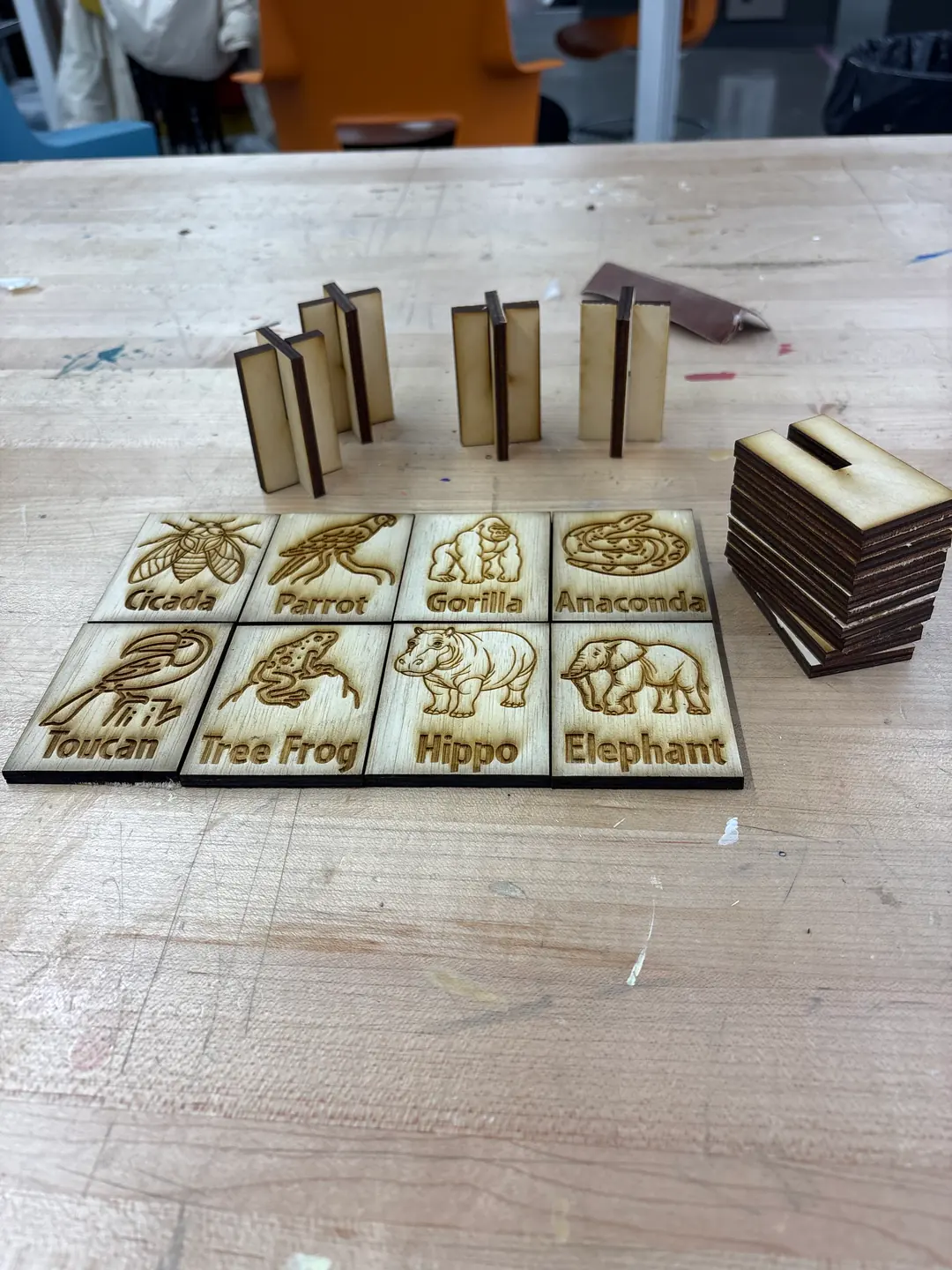
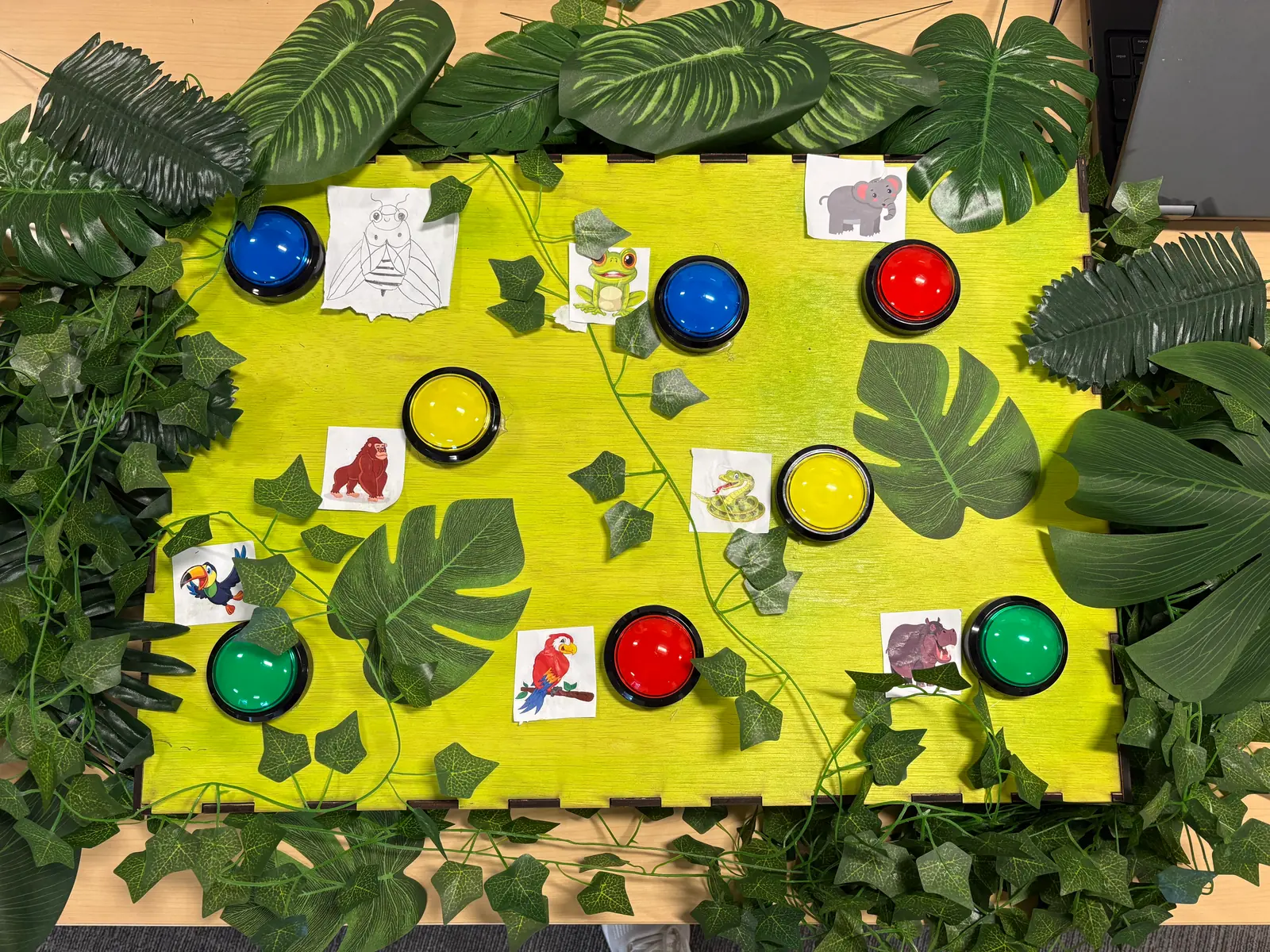
More photos