Cornerstone of Engineering 1 · Northeastern University · Fall 2025
FlashFling Soccer
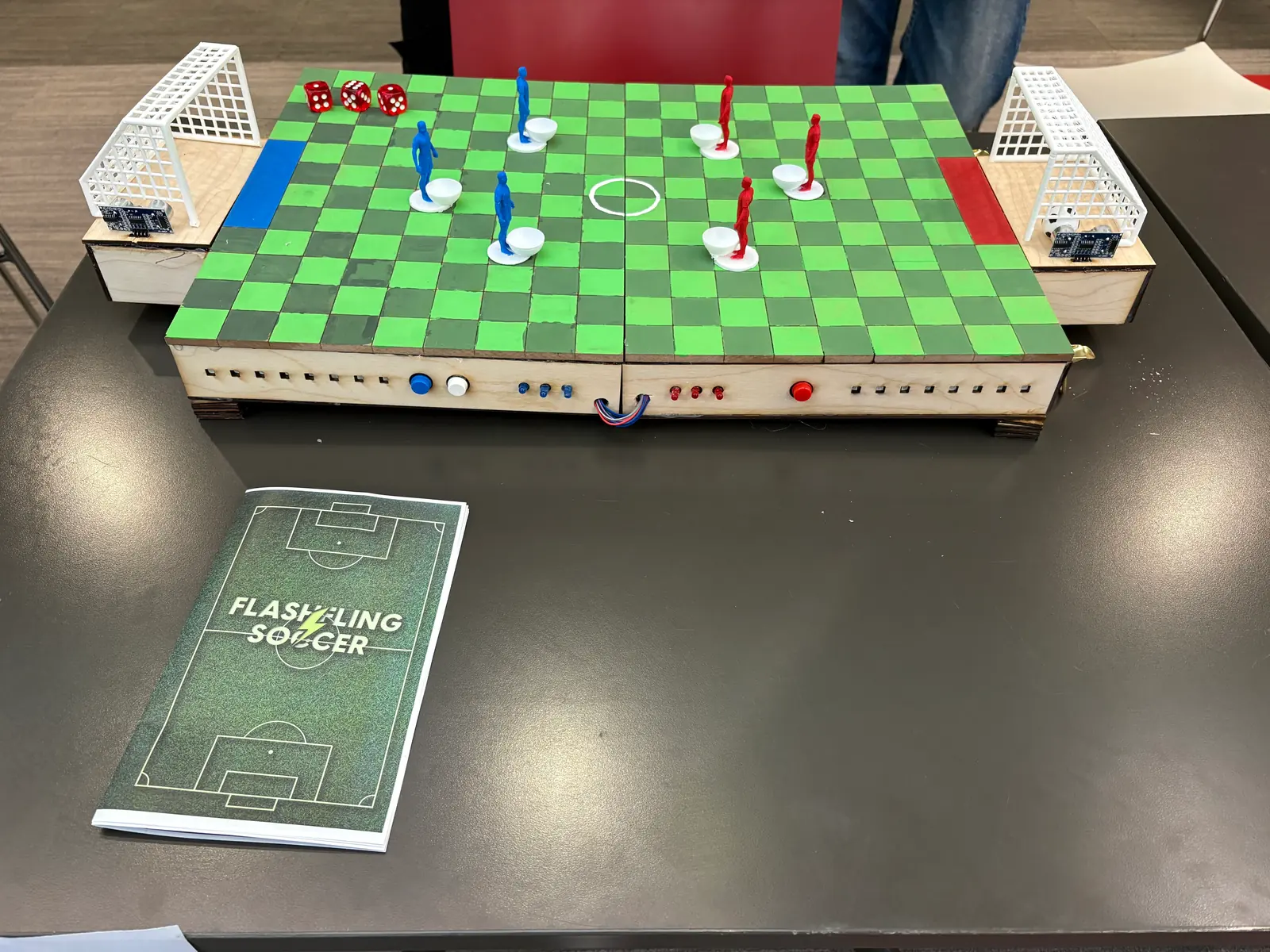
A tabletop soccer game we designed for a client. It has distance-sensing goals, light-strip game clocks, a scoreboard, a speaker and gameplay buttons, all built into a laser-cut plywood box. We went through 4 main iterations, and the client selected it as the best of 16 games presented.
- My role
- Project manager. I led the code (Python), the physical structure (AutoCAD), the circuit design and assembly, and the game mechanics.
- Team
- 4 engineering students
- When
- Oct – Dec 2025
- Shown at
- Northeastern's Engineering EXPO
- Inside
- Microcontroller, ultrasonic distance sensors, LED strips, buttons, speaker, 3D-printed pieces
Process
-
First prototype
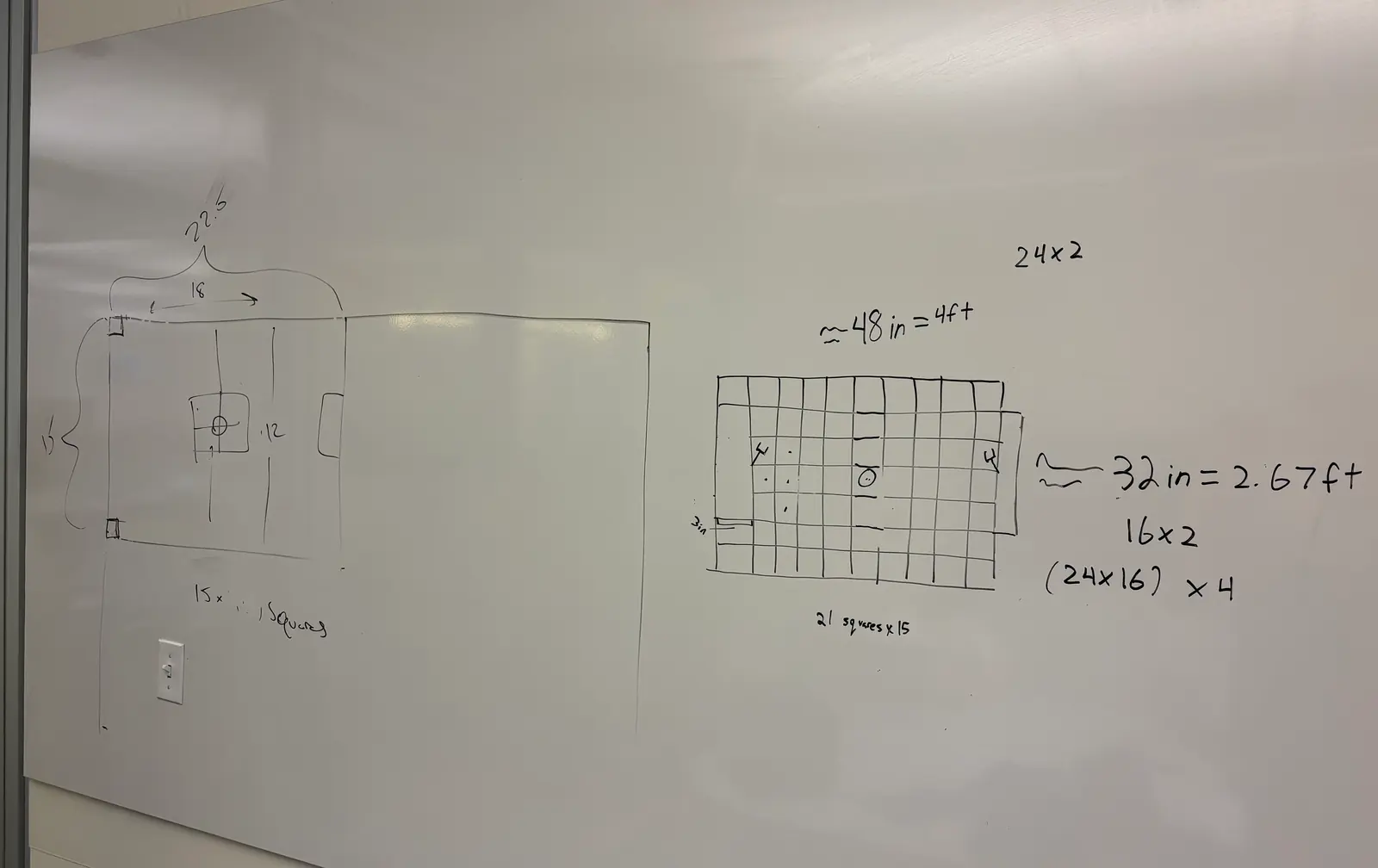
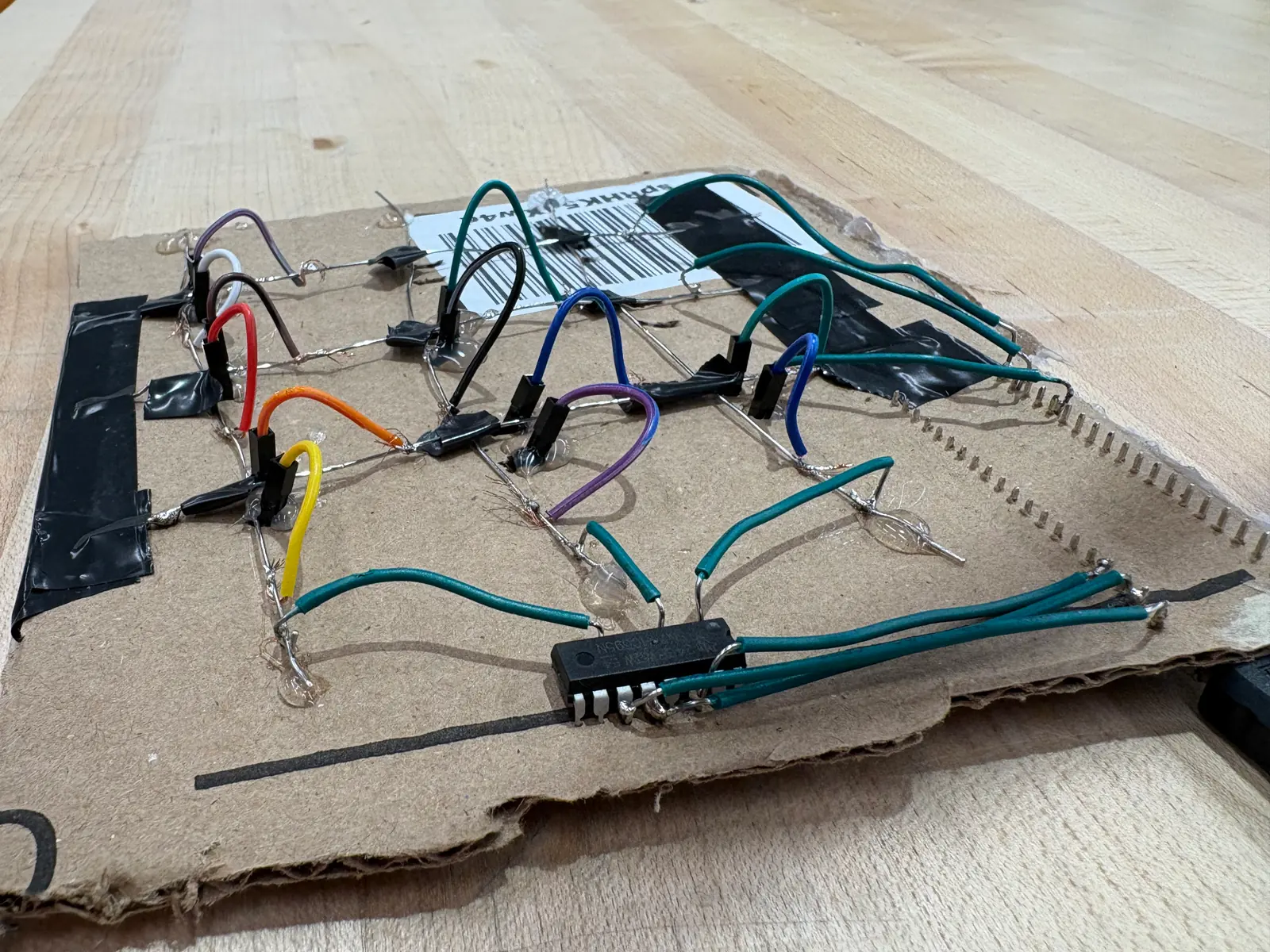
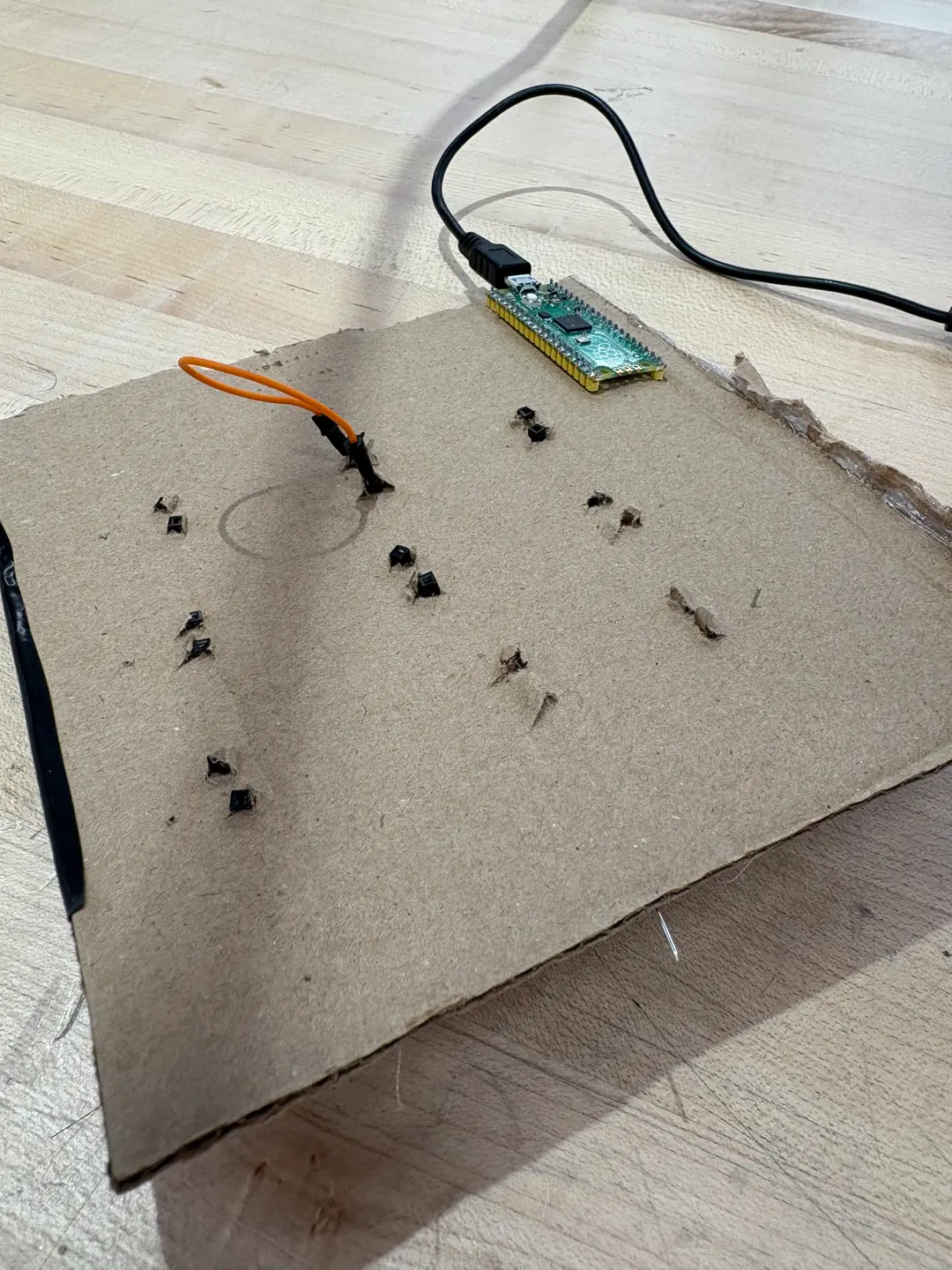
Consulted the client and brainstormed a first prototype, which used a keyboard matrix to detect player positions.
Scrapped: high material and time costs for little improvement.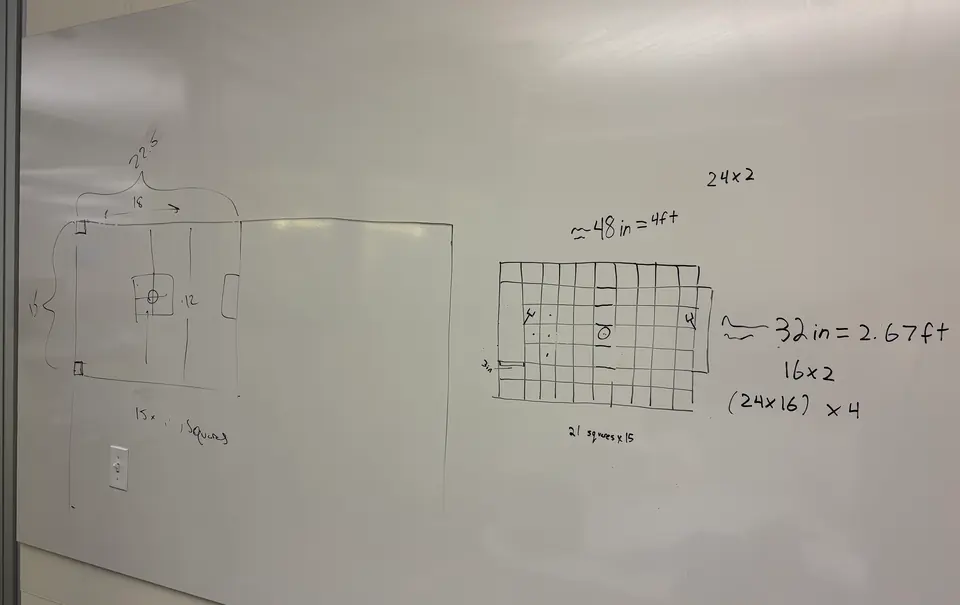
First brainstorm, Oct 2025. 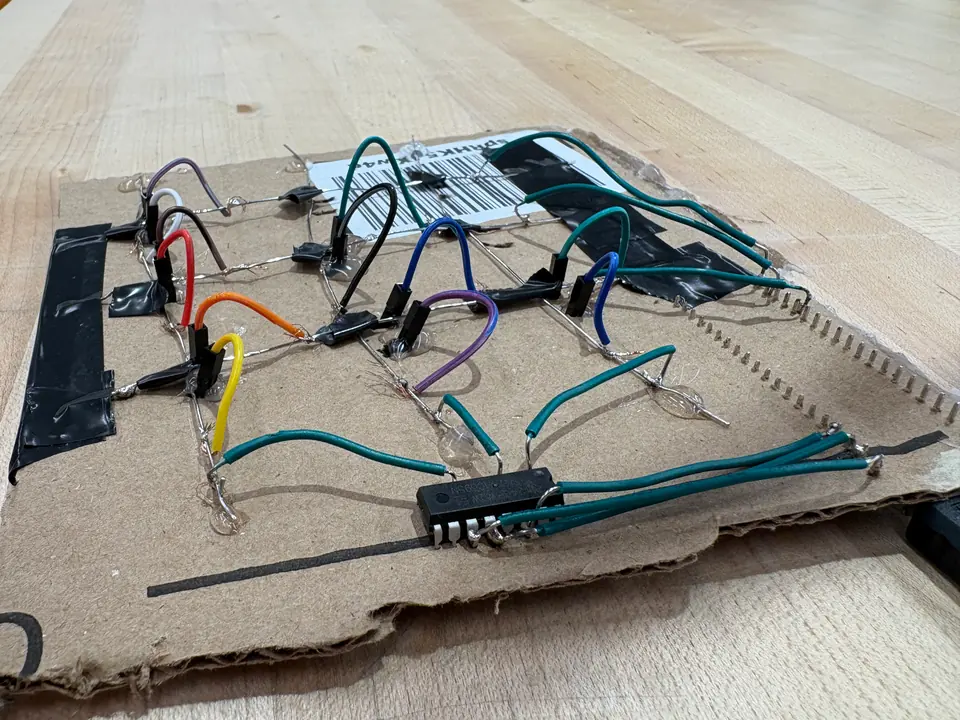
Keyboard-matrix prototype. 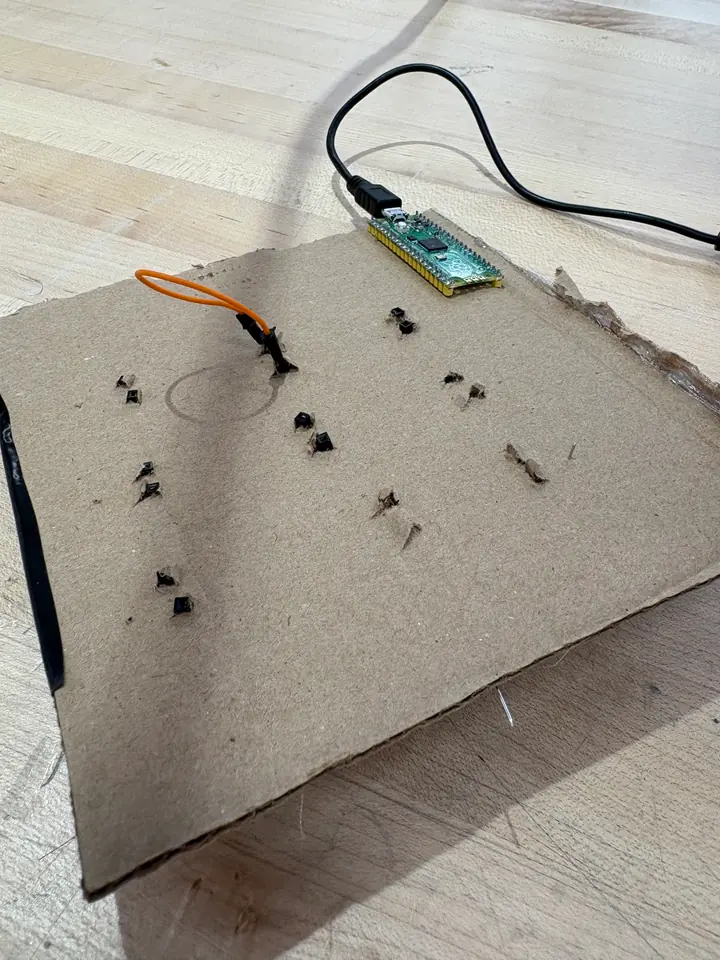
Starting the keyboard matrix. -
Circuits
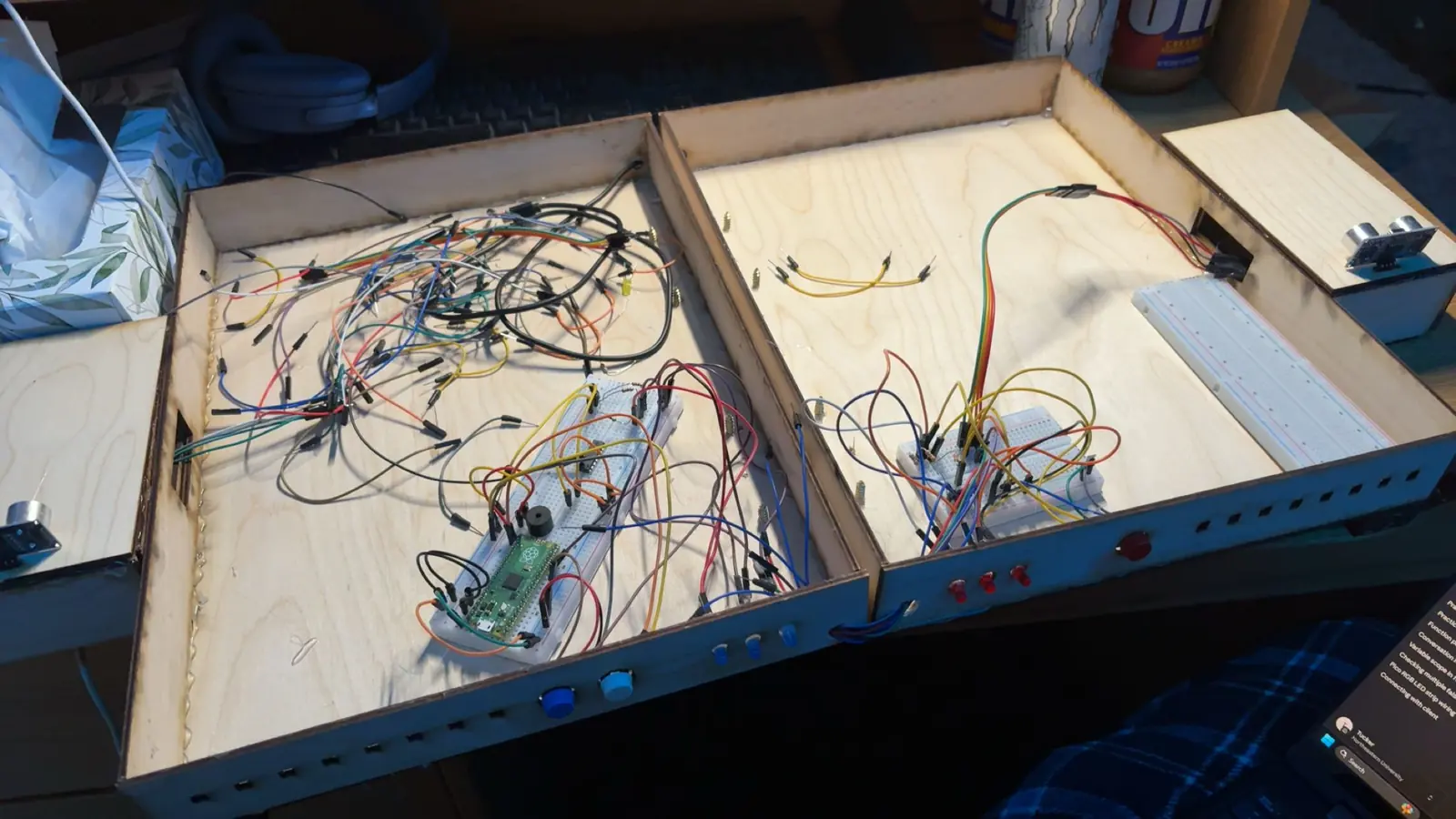
Assembled the circuit using soldering and breadboards to control the lights, buttons, speaker and distance sensors.
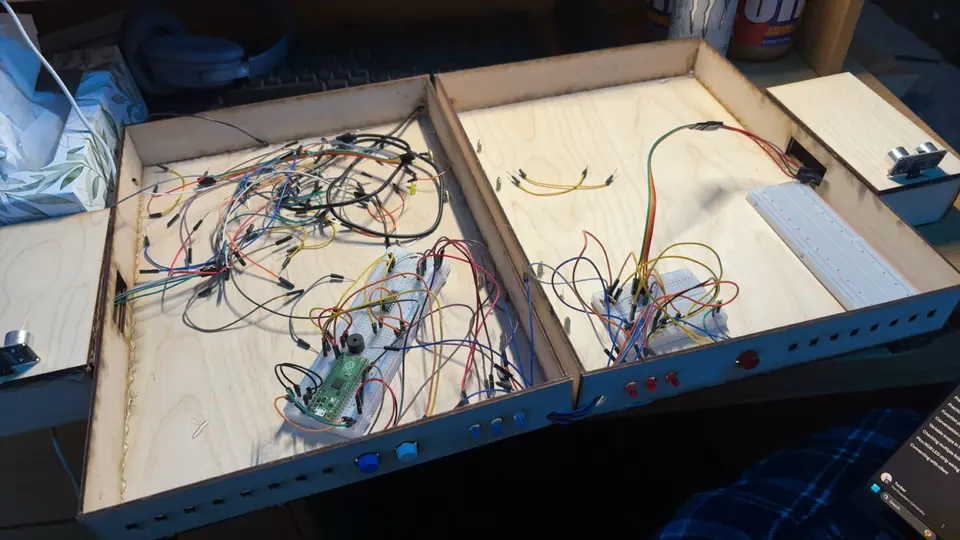
First full integration of the circuits into the board: distance-sensing goals, time-clock light strips, a scoreboard, speaker and gameplay buttons, using a mix of soldering and breadboards. -
Box design
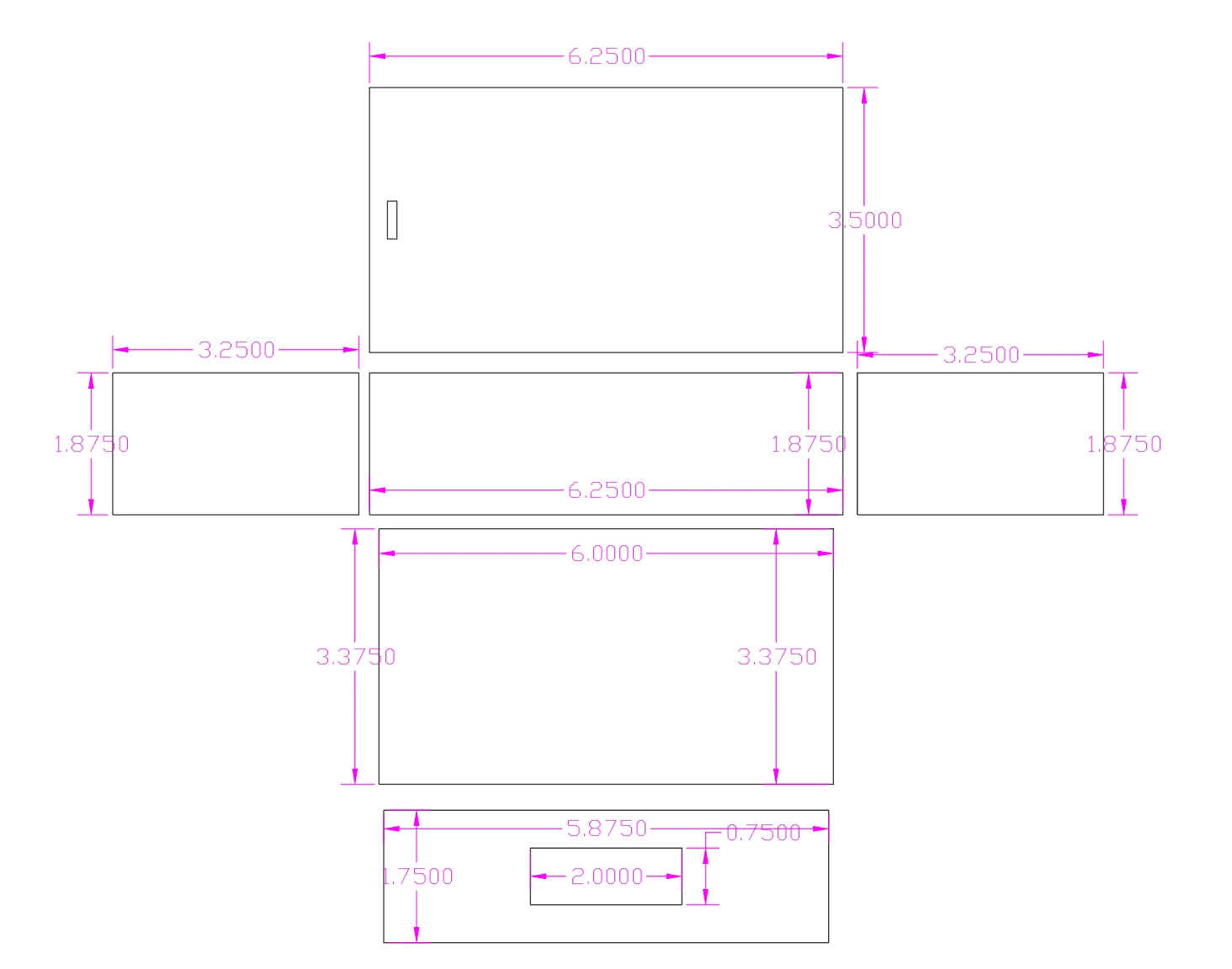
Designed a board box in AutoCAD to fit the circuitry and display the side-board components, then laser cut it out of plywood.
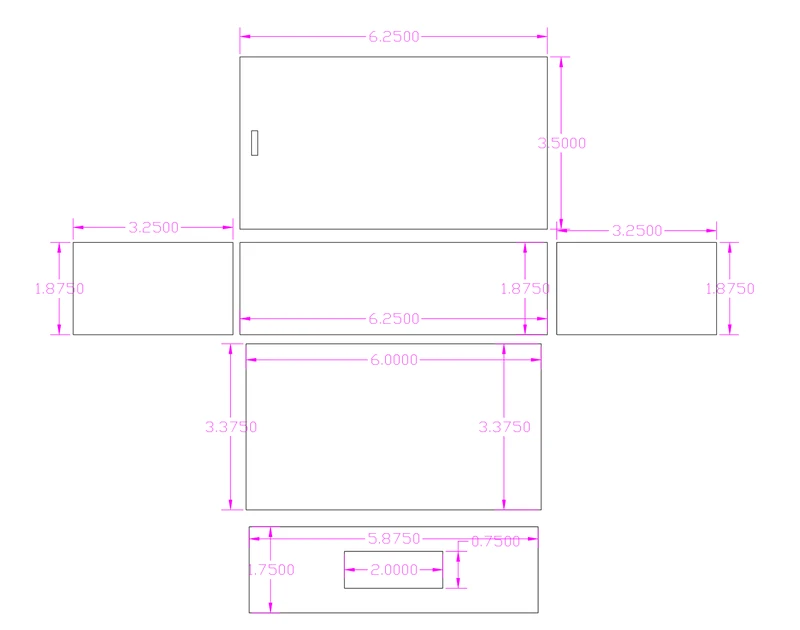
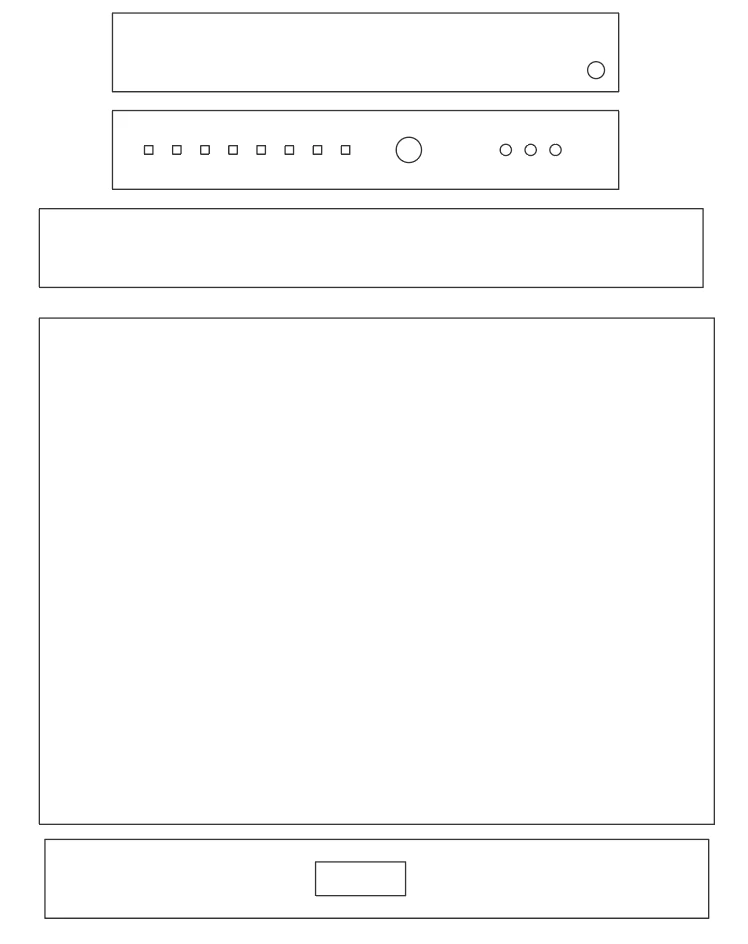
The final AutoCAD drawings used to laser cut the goal extension and the main box structure.
-
Programming
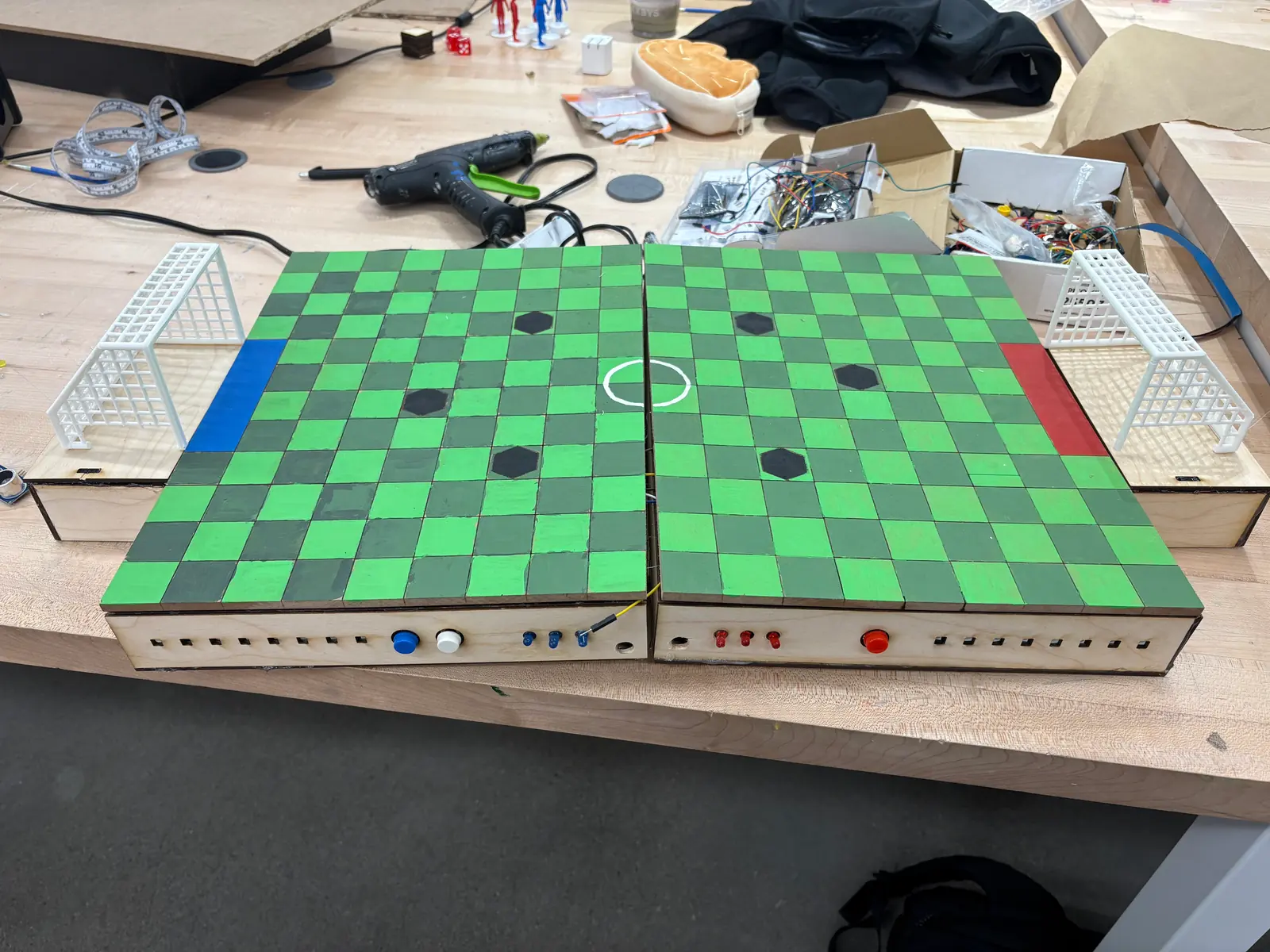
Programmed the full game flow along with the LED strips and distance-sensor functions, resulting in a refined final product ready for presentation.
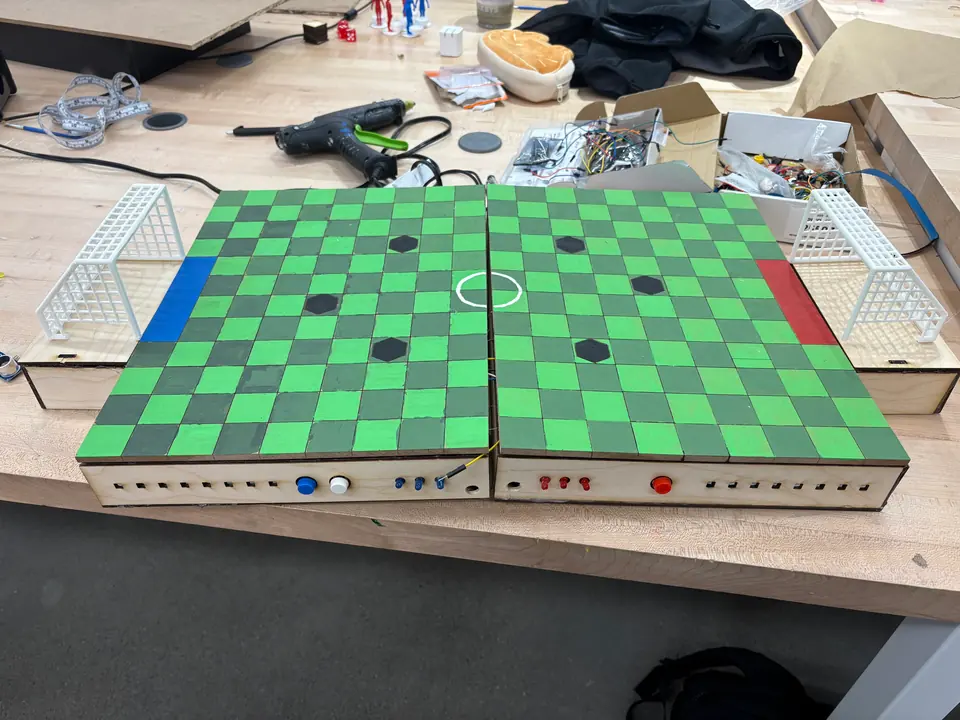
The assembled board.